
Atosiban: Uses, Interactions, Mechanism of Action
Atosiban powder serves as a vital pharmaceutical peptide used primarily in reproductive health research and preterm labor management. As a synthetic oxytocin receptor antagonist with the molecular formula C₄₃H₆₇N₁₁O₁₂S₂ (CAS No. 90779-69-4), this white to off-white peptide compound offers researchers and pharmaceutical manufacturers a reliable active pharmaceutical ingredient for developing tocolytic therapies. With an assay of 99% and HPLC purity ≥98%, the material meets stringent quality standards essential for scientific investigation into uterine relaxation mechanisms and obstetric drug development.
Understanding Atosiban Powder – Uses and Clinical Applications
Atosiban powder is a major step forward in managing complications of preterm labor. The structure of this man-made nonapeptide has been changed from natural oxytocin. It targets uterine movements that put unborn babies at risk before they are due.
Chemical Profile and Formulation Characteristics
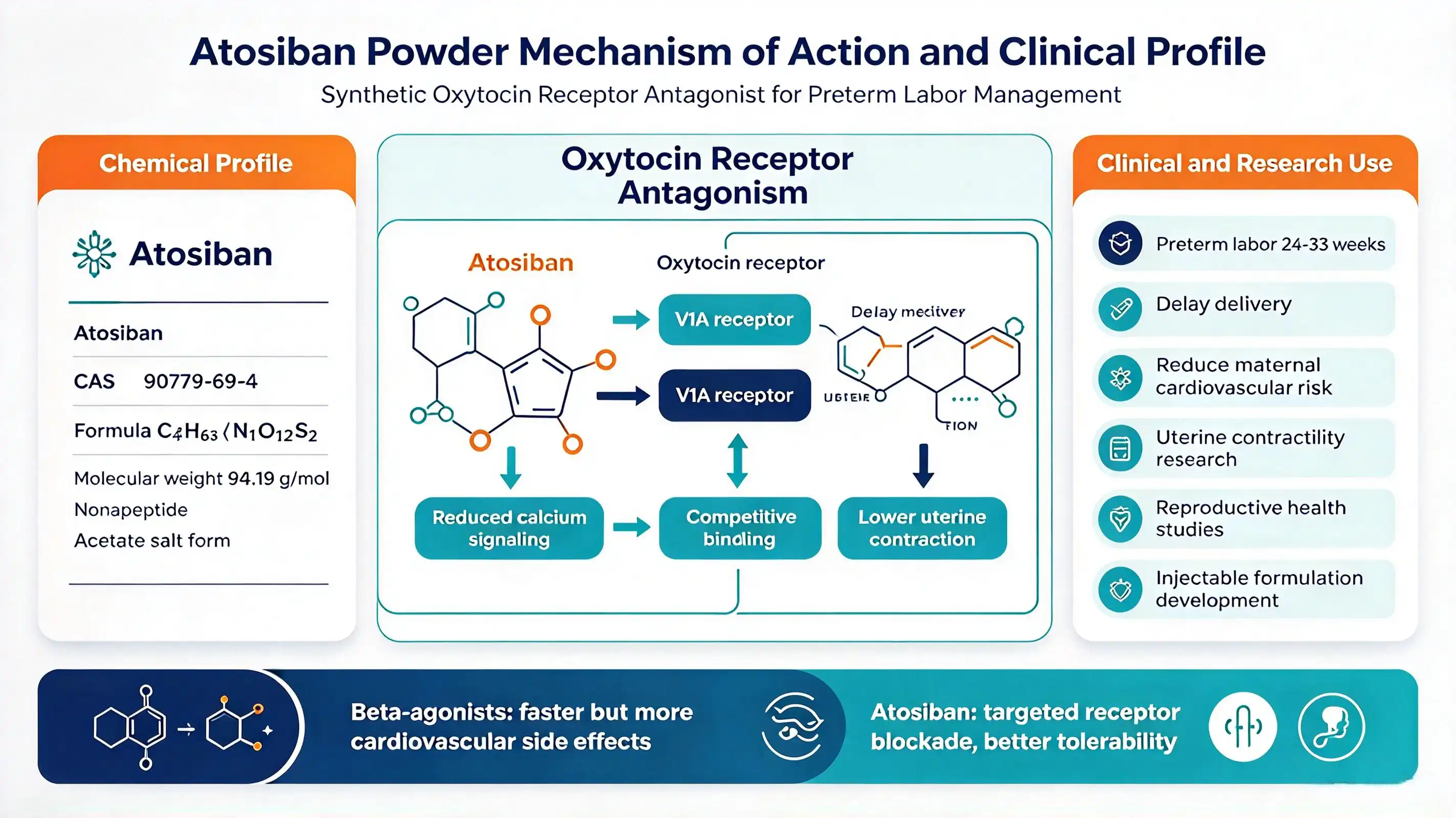
The compound is different from natural oxytocin because it has a different sequence of amino acids (D-Tyr-Iso-Thr-Orn-Ile-Gly-NH2). Because it has a molecular weight of 994.19 g/mol, the peptide is very stable and can be kept at -20°C for two years in a dry, sealed container. Pharmaceutical companies like the variety of package choices, which come in 1g, 100g, and 1kg sizes, which can be used for different production levels, from small batches in the lab to large-scale production. The acetate salt form makes it easier to dissolve, which means it can be used to make injectable formulations.
Clinical Applications and Research Use
Medical studies have shown that this peptide can delay giving birth before the due date between 24 and 33 weeks of pregnancy. In contrast to other beta-agonist tocolytics, this compound works in a specific way to lower cardiovascular side effects in both mothers and babies. Studies in humans have shown that it can be used to manage preterm labor that is about to start. This gives maternity care teams a drug choice that is both effective and safe. The information also backs up exploratory studies into reproductive health, especially those that look at patterns of uterine contractility, pathways for starting labor, and peptide-based therapeutic interventions.
Safety Profile and Regulatory Considerations
Pharmaceutical-grade material must meet strict quality standards, such as having a single impurity level below 1.0%, an acetate content between 5.0 and 12.0%, a water content below 10.0%, and a peptide content above 80.0%. These strict standards are in line with what regulators in many places expect. Professionals in charge of buying things should make sure that sellers give them all the paperwork they need, like Certificates of Analysis, MSDS records, and stable data. The compound's safety profile shows that it causes fewer circulatory problems in mothers than other tocolytics, but it is still important to keep a close eye on it during therapeutic use.
Mechanism of Action and Pharmacological Insights
Knowing how this oxytocin antagonist behaves at the molecular level helps business-to-business buyers figure out the formulation needs and quality control standards that are important for drug development using Atosiban powder.
Molecular Interactions and Receptor Binding
There are oxytocin and vasopressin V1A receptors in myometrial tissue that the peptide works by competing with them. The substance stops endogenous oxytocin from starting the calcium release process that causes the uterus to contract by occupying these receptor sites without causing signal transmission. Because it only blocks certain receptors, it has a therapeutic window where it can delay labor without stopping the uterus completely.
When a drug is administered, it usually starts to work within minutes and stays effective for several hours, depending on how much is given. Structure changes at certain amino acid sites improve receptor affinity while decreasing vasopressin cross-reactivity. This reduces the antidiuretic effects that make other oxytocin blockers harder to use.
Drug Interaction Profile and Contraindications
When making goods with this active ingredient, the people who make them have to think about how they might combine with medicines that people are taking at the same time. The compound doesn't combine much with cytochrome P450 enzymes, so there are fewer worries about how it might affect the metabolism of other widely used obstetric drugs.
But it's still important to be careful when mixing it with other medicines that affect uterus tone, like magnesium sulfate or prostaglandin analogs, because the effects may change the way the treatment works. There are times when it is not a good idea to delay labor because there are more risks involved than delivering the baby right away. These include serious preeclampsia, placental abruption, or an infection inside the uterus.
Storage and Handling for Bulk Materials
Following certain storage rules is necessary to keep the integrity of the product throughout the supply chain. Protecting the peptide from water, light, and changes in temperature is important for its longevity. To stop hydrolytic degradation, large amounts should stay frozen at -20°C in containers that are sealed and have desiccants added. As much as possible, avoid freeze-thaw cycles in the building because they can damage the structure of peptide chains.
Transportation should use cold chain logistics that monitors temperatures and have backup plans for keeping things in the right conditions during international shipping. Before letting the material be used in production, quality control tests should be done as soon as they are received to make sure that the look, clarity, and peptide content meet the requirements.
Comparing Atosiban Powder with Alternative Tocolytics
When making a purchase choice, it helps to compare the different tocolytic options that are out there, taking into account things like clinical success, supply chain issues, and formulation complexity for Atosiban powder.
Effectiveness and Tolerance Analysis
Comparing tocolytic agents in clinical studies shows that they have different performance profiles. Beta-agonists, such as ritodrine, work quickly, but they can cause maternal palpitations, hyperglycemia, and pulmonary edema, which shortens the time that the drug can be used. Calcium channel blockers, like nifedipine, are easier to take by mouth, but some patients have episodes of low blood pressure.
Magnesium sulfate is widely used in some areas, but it needs to be carefully watched for signs of toxicity and works in different ways. The oxytocin antagonist approach has a more targeted mechanism, and clinical trials have shown that it works just as well at delaying delivery while causing fewer cardiovascular problems in the mother. Tolerability tests for patients favor peptide-based tocolysis, especially when given for longer than 48 hours.
Things to Think About When Buying from a Business: Price and Quality
In terms of the supply chain, peptide-based tocolytics are high-end pharmaceutical ingredients that show how difficult it is to make and purify peptides. Aside from the initial API price, procurement managers should look at the total cost of ownership, which includes things like how stable the formulation is, how complete the regulatory documentation is, and how well the supplier can help with technical issues.
Generic peptide providers may have low prices, but impurity profiles that change from batch to batch and inconsistent quality can make it harder to build formulations and send them to regulators. Long-term supply agreements are safer when they come from established suppliers with tested synthesis processes and thorough quality systems. This is especially true for companies making branded formulations or trying to get regulatory approvals in strict markets.
Checking the Certifications and Quality Assurance of Suppliers
When choosing a supplier, criteria should give priority to quality management systems that have been shown to work. ISO approval gives a basic level of confidence about how processes are controlled and how they are documented. GMP compliance is important for sellers who work with pharmaceutical companies because it shows that they follow production standards that reduce the risk of contamination and make sure that products can be tracked.
Getting more licenses, like Halal and Kosher, may help some types of customers get into more markets. In addition to certificates, buyers should look at the technical skills of the provider, such as their analytical testing infrastructure, knowledge with stability studies, and ability to help with regulatory filings. Before committing to large amounts of purchases, it's helpful to check the stability of a seller by asking for process validation data, analysis method details, and information on past customers.
Procurement Guide for Atosiban Powder – Strategies and Considerations
To successfully source pharmaceutical peptides, you have to deal with the complicated technical, organizational, and legal requirements that come with high-value active ingredients like Atosiban powder.
Bulk Buying Parameters and Pricing Models
The cost of custom synthesis efforts is often reflected in the minimum order numbers for peptide APIs. Suppliers might give you 1g for research purposes to start, but for commercial production, you usually need 100g to kilogram amounts to get a good price. When buyers commit to buying more than one kilogram, volume prices become important. However, buyers must weigh the cost saves against the costs of keeping inventory and the product's shelf life.
There are often tiered pricing structures based on purity standards, where research-grade material is priced cheaper than pharmaceutical-grade lots that have been through all the necessary tests. To make accurate cost comparisons, ask for detailed quotes that include not only the unit price but also documentation packages, testing that is included, and retest/expiration dates.
Rules for international shipping and importing
Peptide shipments across borders have to go through a lot of regulatory checkpoints, which requires careful planning. Export paperwork must clearly name the compound, mentioning its CAS number, HS code, and end-use comments that say it will be used for study or to make medicines. In many places, peptides can only be sold to certain types of businesses and can't be shipped to individuals. Logistics in the cold chain become very important, and you need special carriers who know how to handle temperature-sensitive pharmaceutical materials.
For known routes, delivery times usually range from 5 to 15 working days, with customs clearance being the main factor that can change. Buyers should make sure that the prices they are given include duties, taxes, and trading fees, as these can have a big effect on the final cost of goods. Working with sellers who have experience in the places where your goods will be sold speeds up the import process and cuts down on clearance delays.
Product Documentation and Quality Verification
Good providers can be told apart from dishonest ones by the amount of paperwork they provide. For each specification parameter, the Certificate of Analysis report should include the testing method, acceptance criteria, and actual results. HPLC chromatograms give fingerprint data that proves the identity and purity of a peptide. Extra information could include confirmation of the peptide sequence by mass spectrometry, summaries of stability studies, and storage suggestions based on data that has been checked and proven to be correct.
Suppliers that help with drug research should offer help with the Drug Master File or regulatory issues for places that need specific API source details. Setting up quality agreements that spell out who is responsible for testing, how to make changes to specifications, and how to report deviations sets up accountability frameworks that protect both parties' interests over the course of long-term supply relationships.
Conclusion
Finding dependable sources of high-purity peptide active ingredients means finding a balance between technical requirements, following the rules, and the dependability of the supply chain. Atosiban powder is a special kind of drug that is used in important ways in reproductive health studies and managing preterm labor. Buyers shouldn't just look at price when deciding which suppliers to work with; they should also look at all of their skills, such as quality systems, complete documentation, technical support, and logistical know-how. Because of how the peptide needs to be stored and how pure it has to be, choosing a supplier is a smart choice that will have long-lasting effects on product development timelines and regulatory success.
FAQ
What regulatory approvals govern Atosiban acetate usage?
As a prescription tocolytic drug, the compound is legal to sell in the European Union and a number of other places. The drug's regulatory status varies from country to country. Some markets allow it for clinical use, while others only allow research uses. Materials that can be used for scientific research are regulated in a different way than finished pharmaceutical products.
How is the powder form different from the injection form?
Atosiban powder is the pure active medicinal ingredient, it needs to be mixed with water and then given. To make sure that ready-to-use injectable goods are stable, pH-controlled, and sterile, they contain extra fillers, buffering agents, and preservatives. Pharmaceutical companies buy powder in bulk to make their own syringe goods according to their own quality standards.
What steps are taken to make sure the quality of the supplier?
To fully qualify a provider, you should look at their certifications (ISO, GMP), ask for sample testing with proof from an independent lab, check references from current customers, and see how well they can help with technical issues. For high-value partnerships, site checks let people see for themselves how manufacturing and quality control are done.
Partner with Xi'an Yihui for Pharmaceutical-Grade Atosiban Powder Supply
Xi'an Yihui Bio-technology Co., Ltd. is a reliable company that makes Atosiban powder and works with biotechnology, pharmaceutical, and research companies in over 100 countries. Since we started in 2010, we've learned how to make high-purity peptide APIs that meet the strict requirements of researchers and drug developers all over the world. Our Atosiban powder (CAS 90779-69-4) stays ≥98% pure in HPLC and has 99% assay results. It comes with full analytical documentation and stability data to back it up.
We know how hard it is for pharmaceutical companies to buy things: they have to balance strict quality standards with limited budgets, deal with foreign shipping, and make sure that their supply chains are reliable for important production inputs. Our ISO, Halal, and Kosher certifications show that we have strict process control, and our reasonable prices allow us to work with projects ranging from 1g for study to kilogram-scale business production. Products are shipped straight from stock, so there are no long wait times that slow down growth.
Our specialized support team is available 24 hours a day, seven days a week to help with customer service, technical questions, and legal issues that come up during the procurement process. For detailed product specifications, Certificates of Analysis, and quotes that are made just for you, please email our team at sales@yihuipharm.com. You can look at our wide range of APIs, cosmetic materials, and fine chemicals for pharmaceutical and laboratory uses around the world at yihuipharm.com.
References
1. Papatsonis D, Flenady V, Cole S, Liley H. Oxytocin receptor antagonists for inhibiting preterm labour. Cochrane Database of Systematic Reviews, 2015.
2. Valenzuela GJ, Craig J, Bernhardt MD, Holland ML. Placental passage of the oxytocin antagonist atosiban. American Journal of Obstetrics and Gynecology, 1995; 172(4): 1304-1306.
3. Romero R, Sibai BM, Sanchez-Ramos L, et al. An oxytocin receptor antagonist (atosiban) in the treatment of preterm labor: a randomized, double-blind, placebo-controlled trial with tocolytic rescue. American Journal of Obstetrics and Gynecology, 2000; 182(5): 1173-1183.
4. Akerlund M. Targeting the oxytocin receptor to relax the myometrium. Expert Opinion on Therapeutic Targets, 2006; 10(3): 423-427.
5. Lamont RF. The development and introduction of anti-oxytocic tocolytics. BJOG: An International Journal of Obstetrics and Gynaecology, 2003; 110(Suppl 20): 108-112.
6. Worldwide Atosiban versus Beta-agonists Study Group. Effectiveness and safety of the oxytocin antagonist atosiban versus beta-adrenergic agonists in the treatment of preterm labour. BJOG: An International Journal of Obstetrics and Gynaecology, 2001; 108(2): 133-142.

Send Inquiry
You may like
Related Industry Knowledge