
Are terlipressin and vasopressin the same?
No, terlipressin and vasopressin are not the same, though they share structural similarities as vasopressor peptides. Vasopressin is a naturally occurring hormone that regulates water balance and blood pressure, while terlipressin is a synthetic analogue designed for prolonged therapeutic action. Terlipressin powder (CAS No. 14636-12-5), with its molecular formula C₅₂H₇₄N₁₆O₁₅S₂, contains three additional glycine residues that act as a prodrug, gradually converting to the active form in vivo. This structural modification extends the half-life significantly—approximately 6 hours compared to vasopressin's 10-20 minutes—making terlipressin more suitable for clinical emergency scenarios requiring sustained vasoconstriction without continuous infusion.
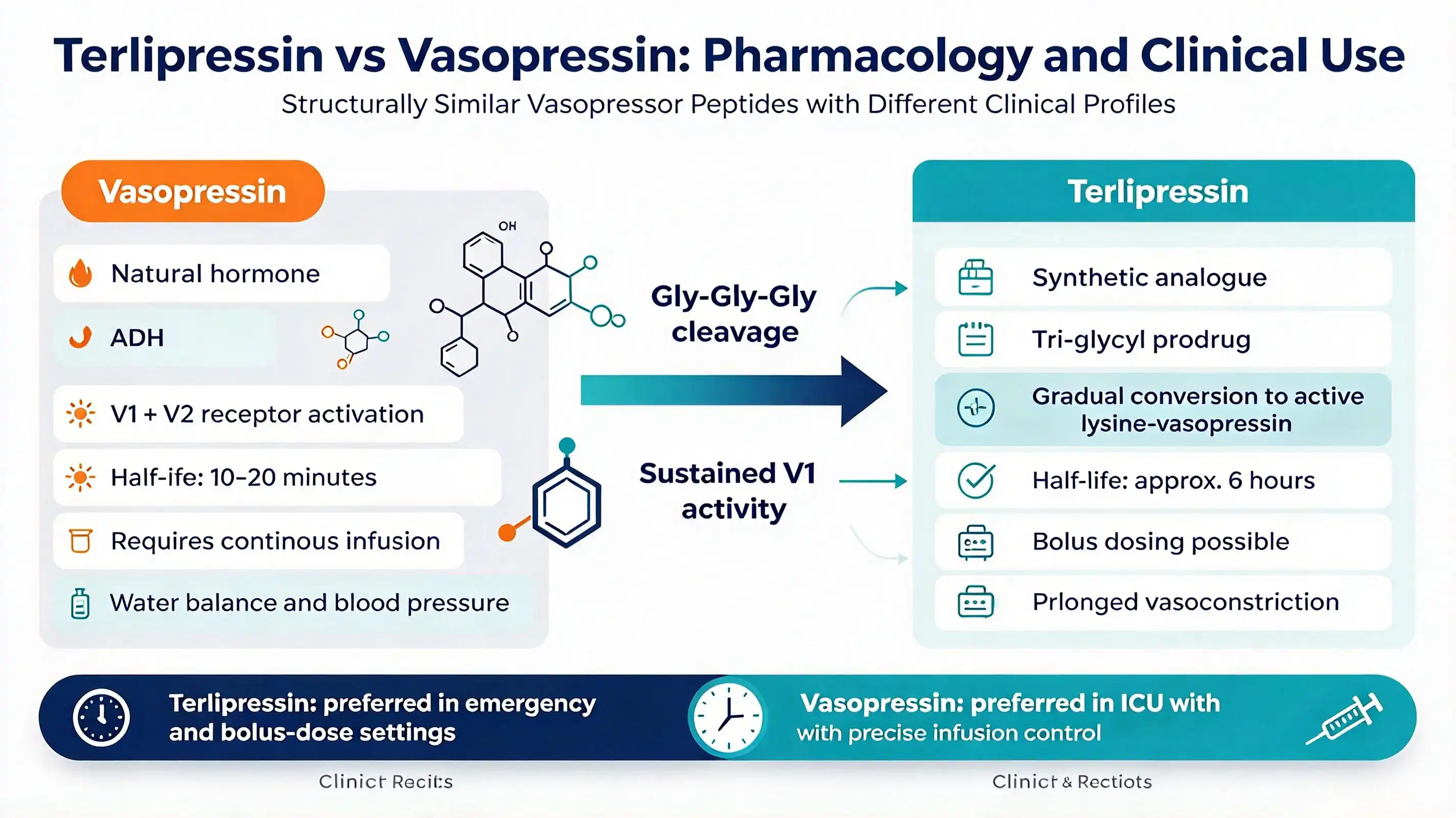
Understanding Terlipressin and Vasopressin: A General Overview
Pharmacological Profiles and Mechanisms of Action
Vasopressin, which is also called antidiuretic hormone (ADH), works by turning on V1 and V2 receptors. Vasoconstriction is controlled by V1 receptors in smooth muscle, especially in splanchnic circulation. Reabsorption of water is facilitated by V2 receptors in kidney collecting tubes. Vasopressin is important for homeostasis regulation because it does two things at once. However, it is hard to figure out how much to give for therapy because vasopressinases break it down so quickly.
Terlipressin gets around these problems by using smart molecular engineering. Tissue peptidases cut the tri-glycyl chain that is linked to lysine-vasopressin, which slowly frees the active lysine-vasopressin. This controlled-release method has a number of benefits that are important for procurement, such as less work for nurses because bolus delivery is used instead of infusion pumps, the risk of sudden changes in blood pressure is lower, and pharmaceutical operations can plan their supply chains more accurately.
Chemical Structure Distinctions
Terlipressin's amino acid sequence (Gly-Gly-Gly-Cys-Tyr-Phe-Gln-Asn-Cys-Pro-Lys-Gly-NH2) shows how it works and what it does. The molecular weight of these first three glycine residues is 1227.37 g/mol, which is higher than vasopressin's molecular weight of 1084 g/mol. This difference, which might not seem important, has a big effect on pharmacokinetics, stability profiles during storage, and handling needs in manufacturing environments. When purchasing these peptides, procurement managers need to be aware that the purity requirements are very different. For example, terlipressin needs to be ≥98% HPLC pure with a single impurity below 1.0%. This is because it is made in a complex way and is closely regulated.
Terlipressin vs Vasopressin: Effectiveness and Clinical Applications
Therapeutic Benefits in Variceal Bleeding
Esophageal varices that cause bleeding into the intestines are a very important situation where terlipressin works very well. There is clinical proof that terlipressin lowers portal pressure by 20 to 30 percent by selectively narrowing blood vessels in the splanchnic area while keeping systemic blood pressure normal. Vasopressin needs to be infused continuously at 0.2 to 0.4 units per minute, but this drug's long-acting nature lets it be dosed at 1-2 mg every 4 to 6 hours.
According to studies published in hepatology journals, terlipressin lowers the risk of death in people with acute variceal bleeding by about 34% compared to a placebo. It also causes fewer ischemic complications than vasopressin therapy. This profile of effectiveness directly translates to procurement value propositions: fewer administration supplies are needed, medication errors are lower, and there are more patients being seen in acute care settings. Pharmaceutical distributors that work with hospital networks should stress both clinical outcomes and operational efficiencies.
Septic Shock and Cardiovascular Research Applications
Terlipressin powder is a synthetic analogue that requires reconstitution before use, but vasopressin still has some uses in treating septic shock, especially when other drugs don't work and the body stops making its own vasopressin. The VASST trial showed that low-dose vasopressin (0.03 units/minute) lowers the need for norepinephrine without having a big effect on death rates. However, the need for constant injection makes things harder in places with few resources. (If Terlipressin powder were available, its longer half-life might reduce infusion demands, but currently it is not a standard substitute in this setting.)
Terlipressin's part in septic shock is still being studied, and cardiovascular researchers are still looking into its possible use in studies of blood pressure control. The peptide selectively binds to V1 receptors and has little effect on V2 receptors. This lowers problems like low sodium levels and fluid retention that can happen with vasopressin. When research institutions buy peptides for hepatorenal syndrome studies or to make new peptide drugs, they should know that high-purity terlipressin acetate makes it possible to repeat experiments in the same way, which is important for keeping the data safe.
Procurement Insights: Sourcing Terlipressin and Vasopressin for Bulk Purchase
Supplier Evaluation Criteria
To find trusted sources for these medicinal peptides, vendors must be carefully evaluated. Regulatory compliance is the basis. Suppliers must show that they are GMP certified, registered with the FDA, and have all the necessary paperwork available, such as a Certificate of Analysis (COA), Material Safety Data Sheets (MSDS), and a Drug Master File (DMF). Manufacturers of peptides that meet the ISO9001 and ISO14001 standards are committed to quality management systems and environmental controls that are necessary to make sure that each batch is the same.
Technical skills are much more important than diplomas. Can the seller do unique synthesis for peptide sequences that have been changed? What kinds of analytical testing tools—HPLC, mass spectrometry (MS-ESI), and amino acid composition analysis—can be used to prove purity claims? Xi'an Yihui Bio-technology was founded in 2010 and has 13 years of experience in its field. It has a wide range of skills thanks to its advanced analytical infrastructure and strict batch tracking procedures.
Pricing and Packaging Considerations
There are a lot of things that affect how much pharmaceutical peptides cost, such as how hard they are to make, the quality of the raw materials, economies of scale, and legal costs. Terlipressin acetate usually costs a lot because it takes a long time to make and has strict quality standards. Competitive sellers offer a range of flexible packing options, including 1g/bag for study purposes, 100g/bag for test production, and 1kg/bag for commercial production. All of these options have the right level of containment to keep moisture out and prevent peptide degradation.
Minimum order numbers have a big effect on how buying strategy is used. Low MOQ providers, like those with 1g minimums, make it possible to create new drugs and get materials for clinical trials without having to worry too much about stock. This adaptability is very helpful for CRO/CDMO companies that work on a wide range of client projects with different peptide needs. Delivery times are just as important as quantities. For example, deciding whether a project can be completed with immediate shipping from stock or 4-6 week lead times for custom synthesis is important.
Storage and transport rules add extra costs that aren't obvious. To store Terlipressin powder at -20°C in a dry, sealed space, it needs to be moved in a cold chain that keeps an eye on the temperature. Instead of just comparing raw unit prices, people who work in procurement should figure out the total landing cost, which should include specialized shipping. Reliable providers give stability data that shows the product's potency stays the same over the claimed shelf life when stored in certain conditions. This protects the quality of the final product.
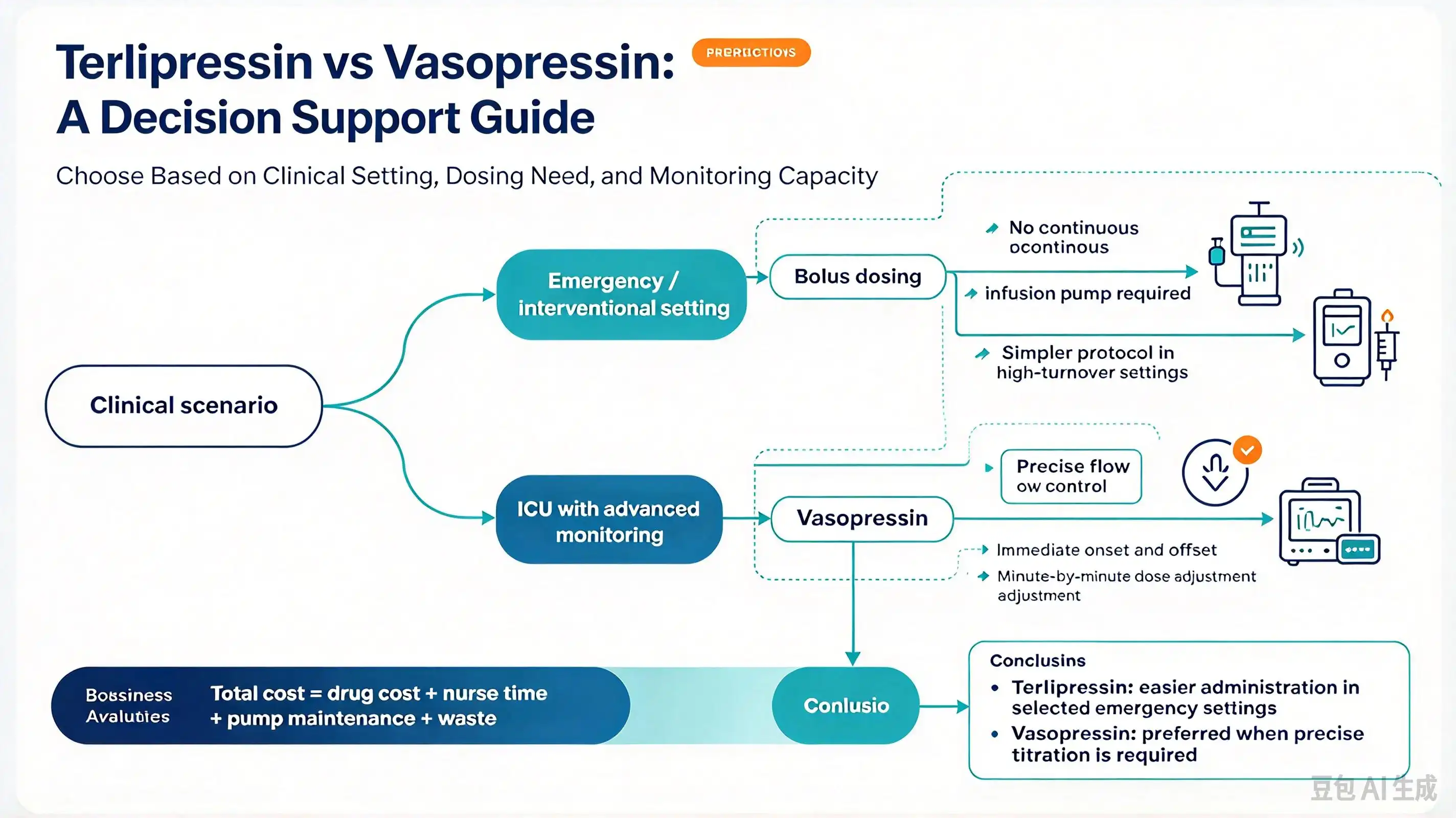
How to Choose Between Terlipressin and Vasopressin: A Decision Support Guide
Clinical and Commercial Decision Parameters
Which of these vasopressors to use varies on the treatment situation, the way the drug is administered, and the type of patient. Terlipressin works well in emergency rooms, interventional radiology areas, or other places that don't have dedicated infusion pump tools and need to start treatment quickly but can't do so continuously. Its bolus dosing makes protocols easier to follow in clinical settings with a lot of turnover.
Vasopressin is still the drug of choice when precise control of blood flow is needed, like in intensive care units with invasive tracking and trained intensivists in charge. The immediate onset and offset make it possible to quickly adjust the dose in response to changes in the patient's condition that happen every minute. When there is infusion infrastructure, vasopressin is often more cost-effective. However, overall cost analyses should include nurse time, pump maintenance, and medication waste from line changes.
Regulatory Compliance and Quality Assurance
When buying pharmaceuticals, strict quality standards must be met. Suppliers of terlipressin must show thorough impurity profiles that show the highest amount of a single impurity being less than 1%, the peptide content (N%) being at least 80%, and the water content (via the Karl Fischer method) being less than 10%. These requirements aren't made up on the spot; they come from a lot of pharmacological studies that set stable requirements and biological activity limits.
Certain rotation readings (-95.0° to -105.0° at c=1 1% HAc) and an acetate content below 15.0% as found by HPLC are also used to check for accuracy and find possible fakes or damaged materials. Teams in charge of buying things should ask for SGS test reports or other third-party confirmations that the batch meets the requirements. A mass balance between 95.0 and 105.0% ensures that the labeled content fits the real amount of peptide, which is important for correct dosing and formula development.
Best Practices for Using Terlipressin Powder: Administration and Storage Guidelines
Handling and Reconstitution Protocols
Pharmaceutical-grade Terlipressin powder looks like a white crystalline solid that needs to be carefully mixed back together. The peptide's disulfide links between cysteine residues make the structure hard, but they can still be broken down by oxygen if they are exposed to air. Reconstitution should happen right before use with sterile injection water or the right diluent listed in the product information.
Keep using clean techniques while handling peptides, as they could be a place where microbes can grow and spread. For Terlipressin powder, as with other peptides, once reconstituted, solutions only stay stable for a short time—usually 24 hours when kept in the fridge—so single-use vial methods are needed for medical uses. For research purposes, aliquots may be stored for longer at -80°C, but freeze-thaw cycles should be kept to a minimum to avoid peptide bond hydrolysis or aggregation.
Storage Optimization and Stability Monitoring
Long-term keeping at -20°C in dry, sealed conditions extends the shelf life, which is usually between 24 and 36 months for pure materials. Temperature changes above -10°C speed up the breakdown process, which could lower the amount of peptides and make more impurities. Temperature data loggers should be required by procurement specifications during shipping and storage, and there should be clear criteria for what counts as a thermal event.
Monitoring stability regularly with HPLC analysis finds loss of stability before it has a clinical effect. If the data shows that pollution peaks are rising or the main peak area is falling, it means that the collection needs to be rotated. Facilities that store multiple batches of peptides should use first-expired-first-out (FEFO) systems that are integrated with electronic inventory management. This will keep compromised material from being used by accident.
Conclusion
Even though their structures are similar, Terlipressin powder and vasopressin are used for different types of treatments. Understanding the differences in their pharmacological effects, clinical uses, and procurement effects helps people make smart decisions about where to get them. Terlipressin's longer half-life and bolus administration make it easier to use in intensive care, while vasopressin's precise control of blood flow is better in environments with close monitoring.
Product reliability is ensured by strict evaluation of suppliers, thorough scientific testing, and following the right dealing procedures. When choosing between these peptides, procurement workers have to think about how well they work, how much they cost, and how easy it is to get them to the right place. Pharmaceutical supply chains that last a long time are built on strategic relationships with certified makers who consistently offer high quality.
FAQ
What is the primary difference between terlipressin and vasopressin in clinical use?
The main difference is in the way the drugs move through the body. Vasopressin needs to be continuously infused through an IV because its half-life is 10 to 20 minutes. Terlipressin, on the other hand, works as a prodrug and lasts for about 6 hours, so it can be given in bolus doses at different times. This difference has a big effect on the nursing needs, the infusion pump needs, and the general difficulty of administration in hospital situations.
Can pharmaceutical companies purchase terlipressin powder online in bulk quantities?
To legally buy a lot of pharmaceutical-grade Terlipressin powder, you need to deal directly with certified makers instead of using normal online shopping methods. Formal business connections are needed to make sure that regulations are followed, that paperwork is checked correctly, and that quality is maintained. Reliable sellers, such as Xi'an Yihui Bio-technology, make it easy to buy in bulk through dedicated sales channels and offer personalized quotes based on specific needs for volume, purity, and packing.
What safety considerations are most important when sourcing these peptides?
Verified source certifications (GMP, ISO), full analytical paperwork (COA, MSDS), the right way to store and ship to keep the cold chain intact, and clear usage limits are all important safety factors. Terlipressin shouldn't be used in people with certain types of heart disease and needs to be closely watched for cardiac effects. For patient safety reasons, quality assurance is a must.
Partner with Xi'an Yihui for High-Quality Terlipressin Powder Supply
Pharmaceutical-grade peptides that meet strict international standards are what Xi'an Yihui Bio-technology does best. Our Terlipressin powder maker has manufacturing facilities that are ISO9001 and ISO14001 approved and can give ≥98% HPLC purity with full analytical documentation. We keep a lot of items in stock so that we can ship them anywhere in the world right away. We offer flexible packaging for 1g research batches up to 1kg commercial batches. Our low prices come from 13 years of perfecting the synthesis process, and we make sure that every batch meets the requirements with advanced HPLC, mass spectrometry, and amino acid composition analysis.
Get in touch with our technical team at sales@yihuipharm.com to get quotes that are tailored to your unique study or production needs. Visit yihuipharm.com to read detailed product specifications and certification paperwork. This website gives procurement professionals access to resources that help them make confident decisions about where to buy things.
References
1. Krag, A., Borup, T., Møller, S., Bendtsen, F. (2008). Efficacy and safety of terlipressin in cirrhotic patients with variceal bleeding or hepatorenal syndrome. Advanced Therapy, 25(11), 1105-1140.
2. Chavez-Tapia, N. C., Barrientos-Gutierrez, T., Tellez-Avila, F., Sorocedo, M., Uribe, M. (2011). Meta-analysis: antibiotic prophylaxis for cirrhotic patients with upper gastrointestinal bleeding. Alimentary Pharmacology & Therapeutics, 34(5), 509-518.
3. Russell, J. A., Walley, K. R., Singer, J., Gordon, A. C., Hébert, P. C., Cooper, D. J. (2008). Vasopressin versus norepinephrine infusion in patients with septic shock. New England Journal of Medicine, 358(9), 877-887.
4. Morelli, A., Ertmer, C., Rehberg, S., Lange, M., Orecchioni, A., Cecchini, V. (2009). Phenylephrine versus norepinephrine for initial hemodynamic support of patients with septic shock. Critical Care, 13(6), R180.
5. Gluud, L. L., Christensen, K., Christensen, E., Krag, A. (2012). Terlipressin for hepatorenal syndrome. Cochrane Database of Systematic Reviews, Issue 9, Article CD005162.
6. Dunser, M. W., Mayr, A. J., Ulmer, H., Knotzer, H., Sumann, G., Pajk, W., Friesenecker, B., Hasibeder, W. R. (2003). Arginine vasopressin in advanced vasodilatory shock: a prospective, randomized, controlled study. Circulation, 107(18), 2313-2319.

Send Inquiry
You may like
Related Industry Knowledge